Mount Huashan
- West Peak (Lotus Peak)
- North Peak (Cloud Terrace Peak)
- East Peak (Sunrise Peak)
- South Peak (Falling Goose Peak)
- Hawk's Flip
Mount Huashan
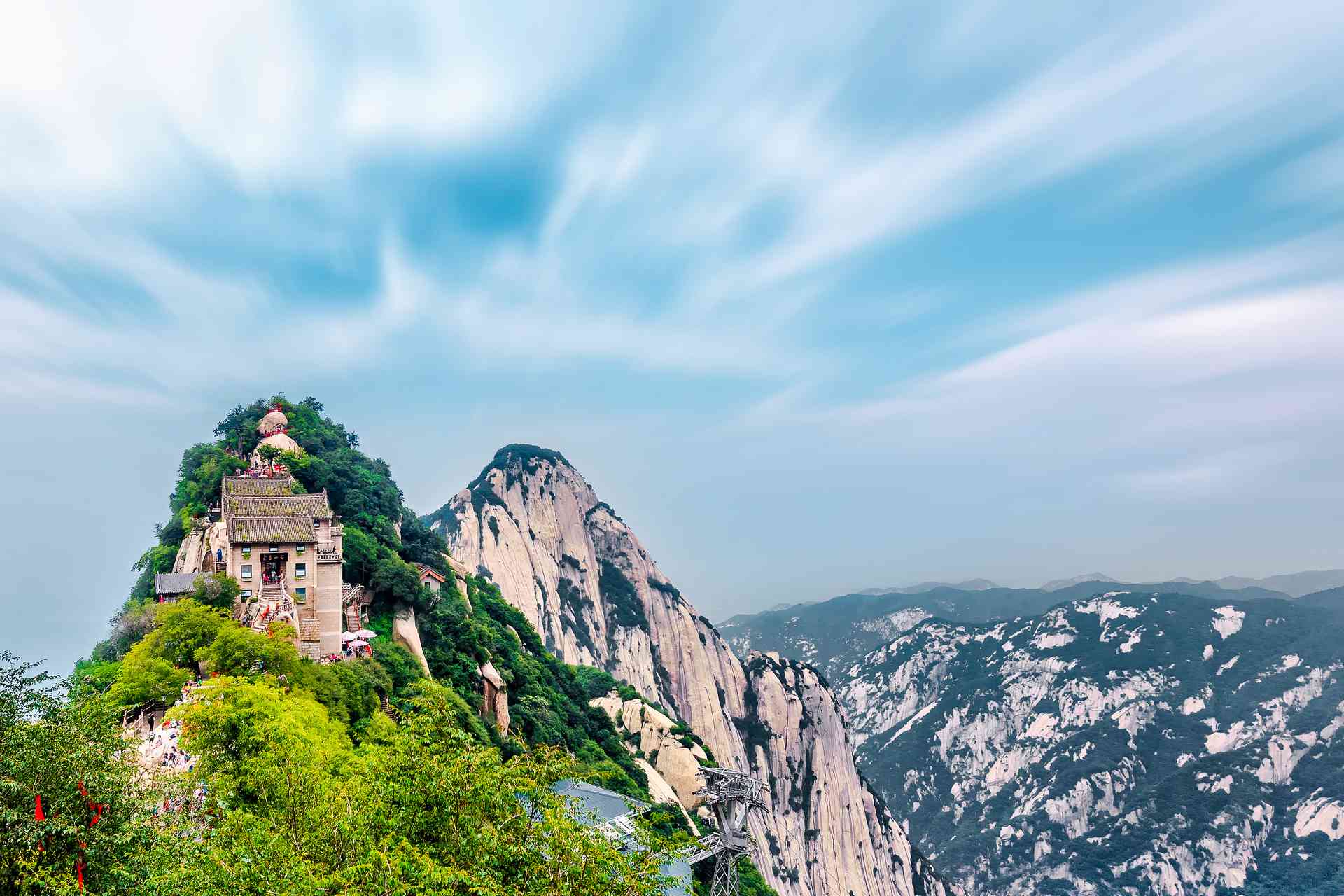
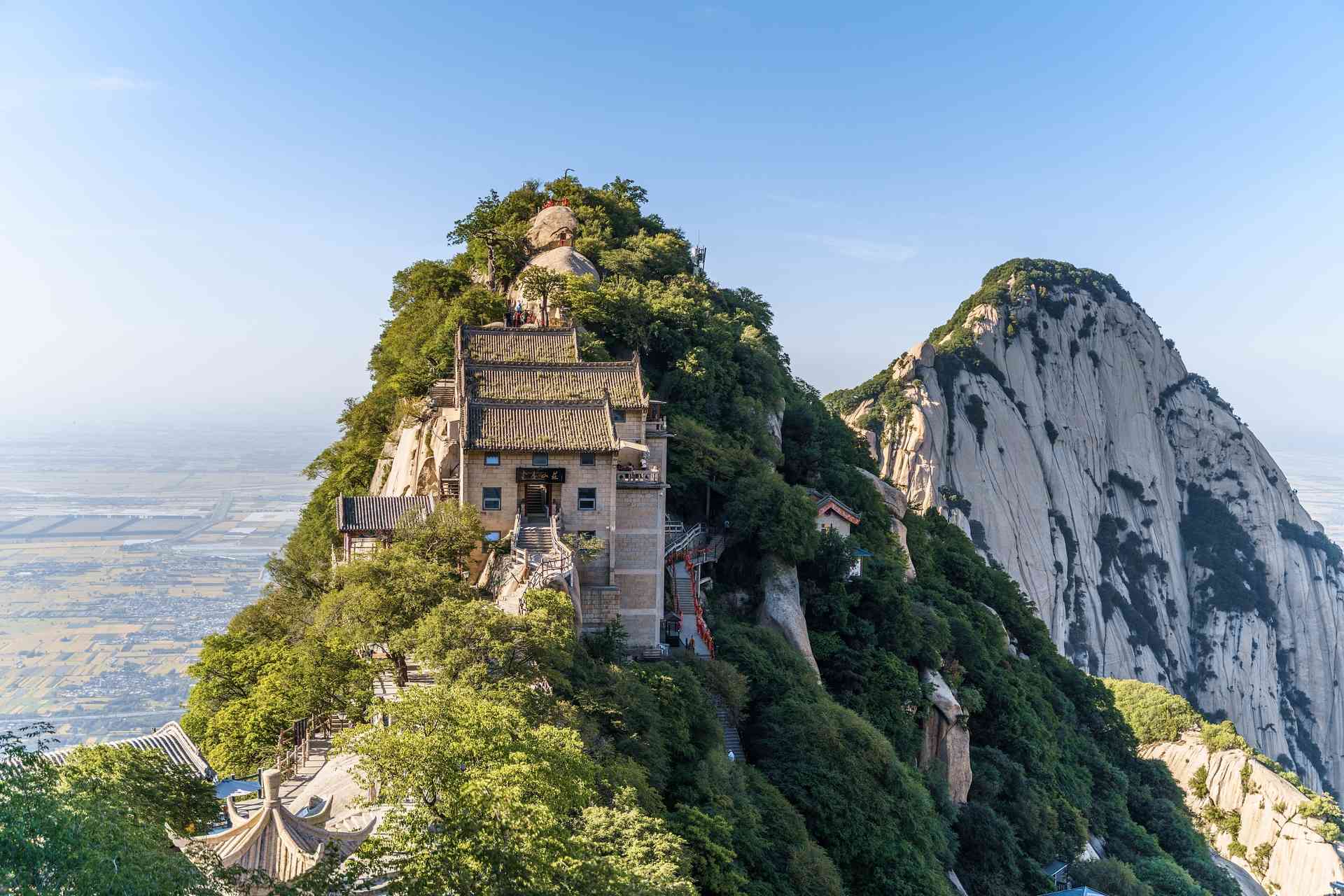
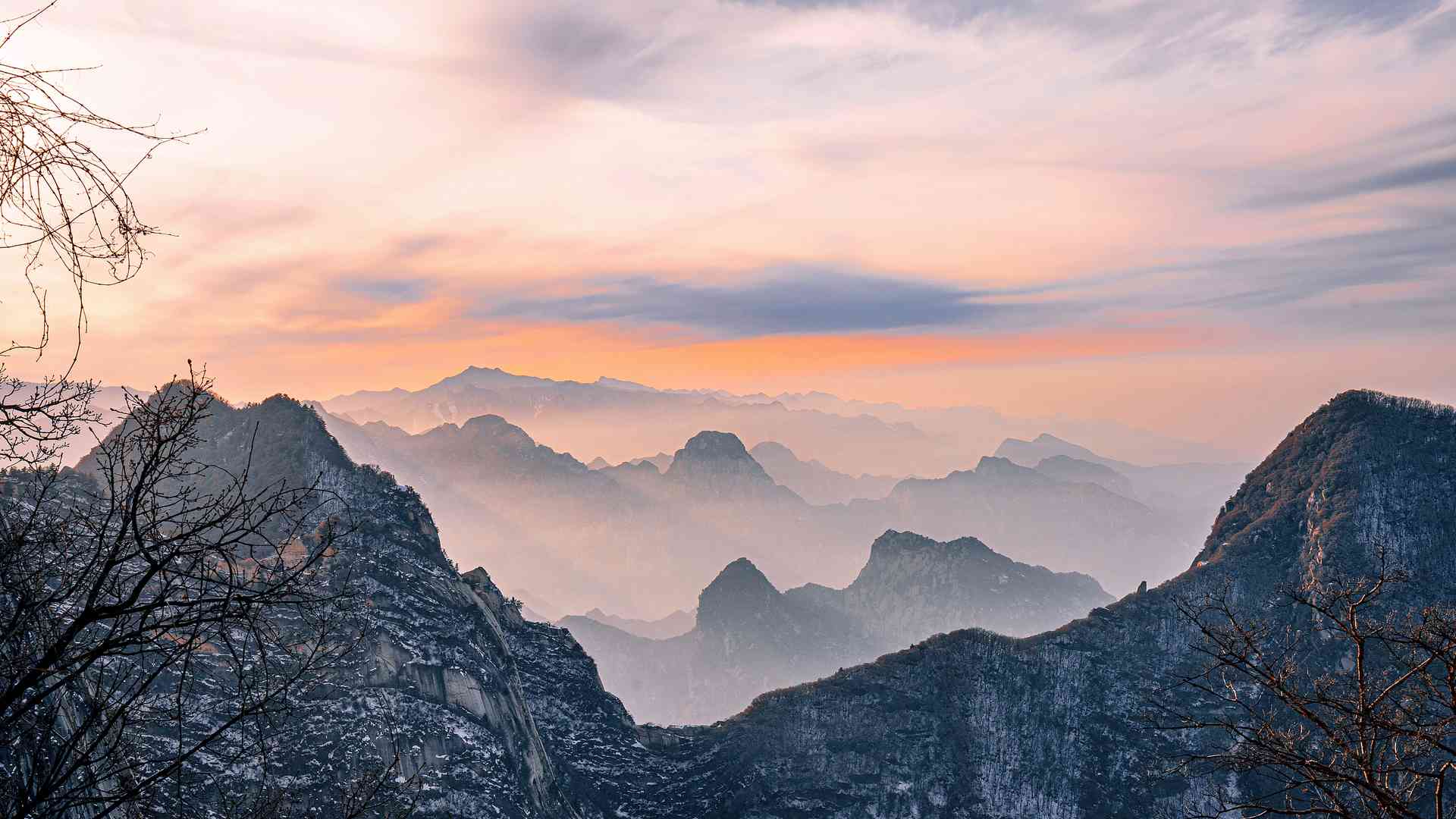
Mount Huashan is in Huayin, Weinan, Shaanxi Province. It is the Western Peak of China's Five Great Mountains and is known as "the most precipitous mountain under heaven." Its main South Peak rises 2,154.9 m, the highest of the Five Great Mountains. Huashan comprises five peaks—East, West, South, North, and Central—and has long been famed for its steep terrain. It is also a Taoist holy site (the Fourth Grotto-Heaven) and a symbol of wuxia culture (Jin Yong's "Swordsmanship on Huashan").
The Five Peaks
South Peak (Falling Goose Peak)
At 2,154.9 m, it is Huashan's highest peak, called "the head of Huashan." From the summit you can see the Yellow River and Wei River like threads and rolling sea of clouds.
East Peak (Sunrise Peak)
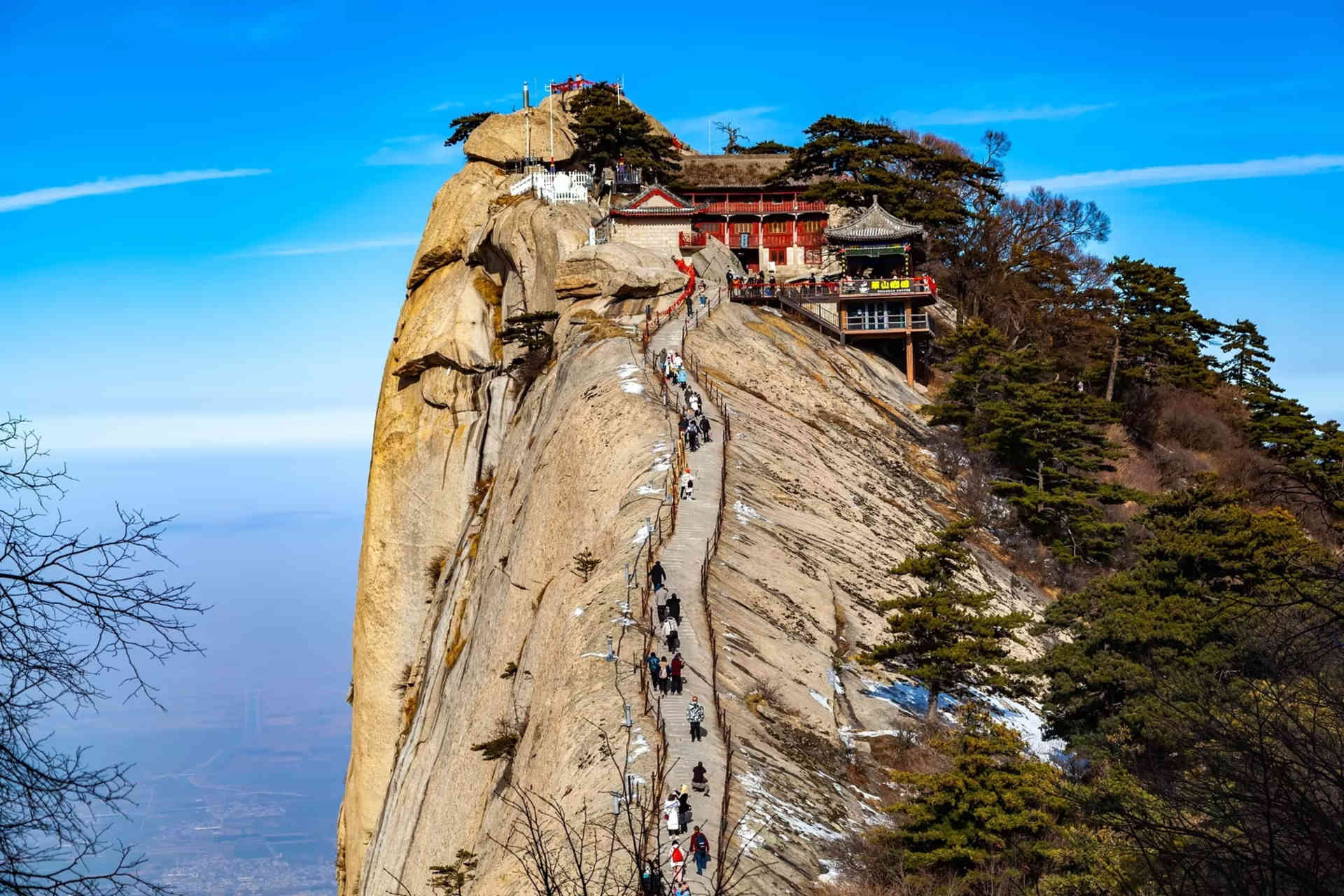
At 2,096.2 m, it is the best spot for sunrise. The famous Hawk's Flip cliff path is here—Huashan's second most dangerous route.
West Peak (Lotus Peak)
At 2,086.6 m, it is Huashan's most dramatic peak. The summit resembles lotus petals and is linked to the legend of Chenxiang splitting the mountain to save his mother (from Lotus Lantern).
North Peak (Cloud Terrace Peak)
At 1,614.7 m, it is Huashan's lowest peak. It is the setting of the "Taking Huashan by Strategy" story and offers a full view of the "Three Peaks Beyond the Sky."
Central Peak (Jade Maiden Peak)
At 2,042.5 m, it is Huashan's smallest peak. Legend says it was where Nongyu played the flute and attracted the phoenix; the Jade Maiden Temple stands here.
Must-See Sights
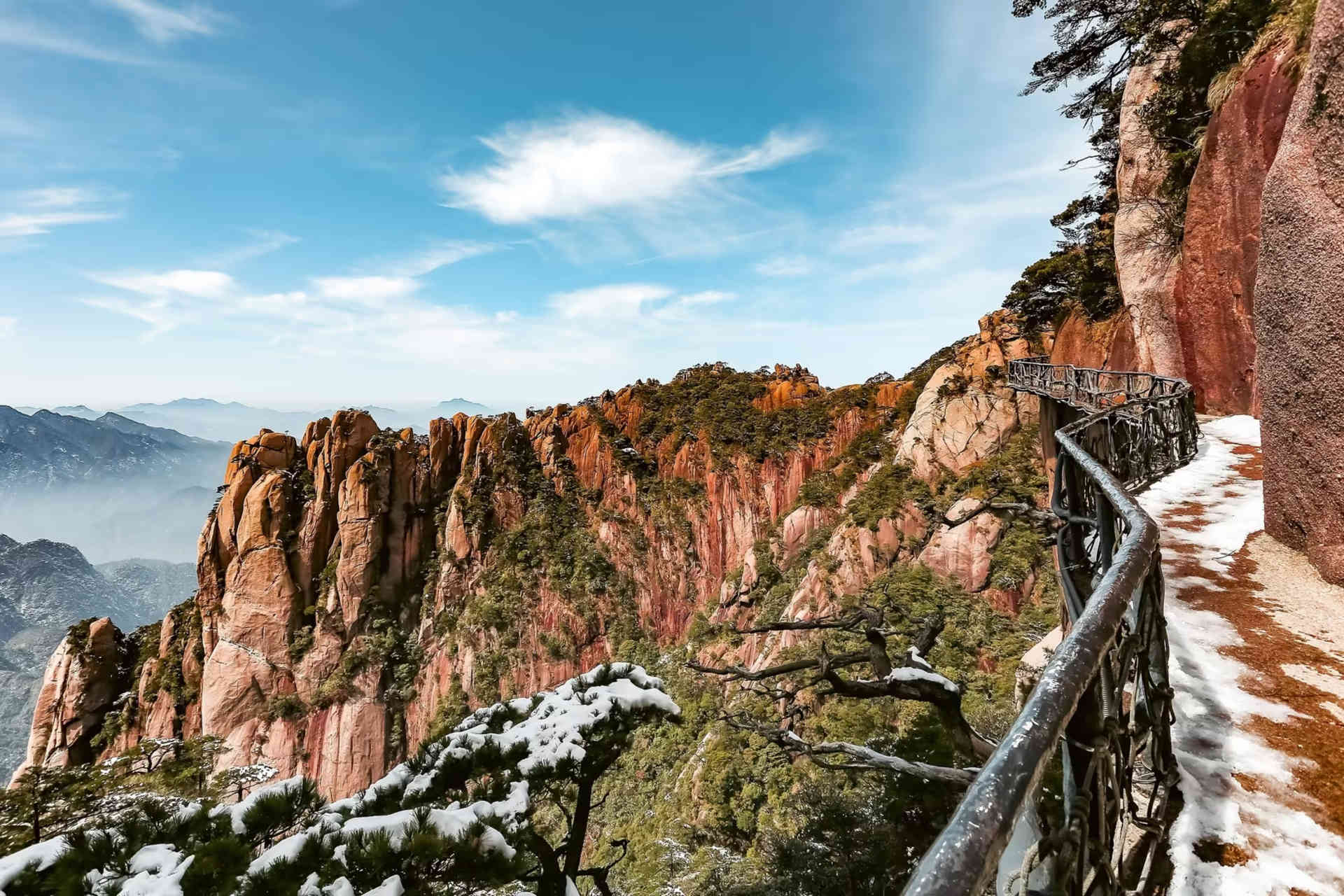
Plank Walk in the Sky — Huashan's No. 1 danger
A 30 cm-wide wooden plank path on a cliff at 2,160 m on the east side of South Peak. You walk facing the wall, chest close to the rock, with a sheer drop beneath. Fee: ¥30 (cash only). Requirements: two people together, height ≥1.5 m, age 13–55.
Hawk's Flip — Huashan's No. 2 danger
Next to East Peak Hotel, carved into an overhanging cliff. You climb down like a hawk flipping over, leading to the Chess Pavilion. Fee: ¥30 (cash only).
Canglong Ridge
A blade-like ridge linking North Peak with the southern peaks, with deep chasms on both sides, resembling a dragon. Legend says Tang scholar Han Yu was so terrified he wept and threw a letter asking for help here.
Thousand-Foot Precipice, Hundred-Foot Gorge, Laozi's Plough Ditch
The three famous passes of "one road up Huashan since ancient times." Thousand-Foot Precipice has 370+ steps at 70° slope; Hundred-Foot Gorge has 91 steps with a "Heart-Stopping Stone" above; Laozi's Plough Ditch is the last dangerous section before North Peak, about 300 steps.
Golden Lock Pass
The throat to East, South, and West Peaks. Chains are covered with golden locks and red ribbons—a striking sight when the wind blows.
Recommended Routes
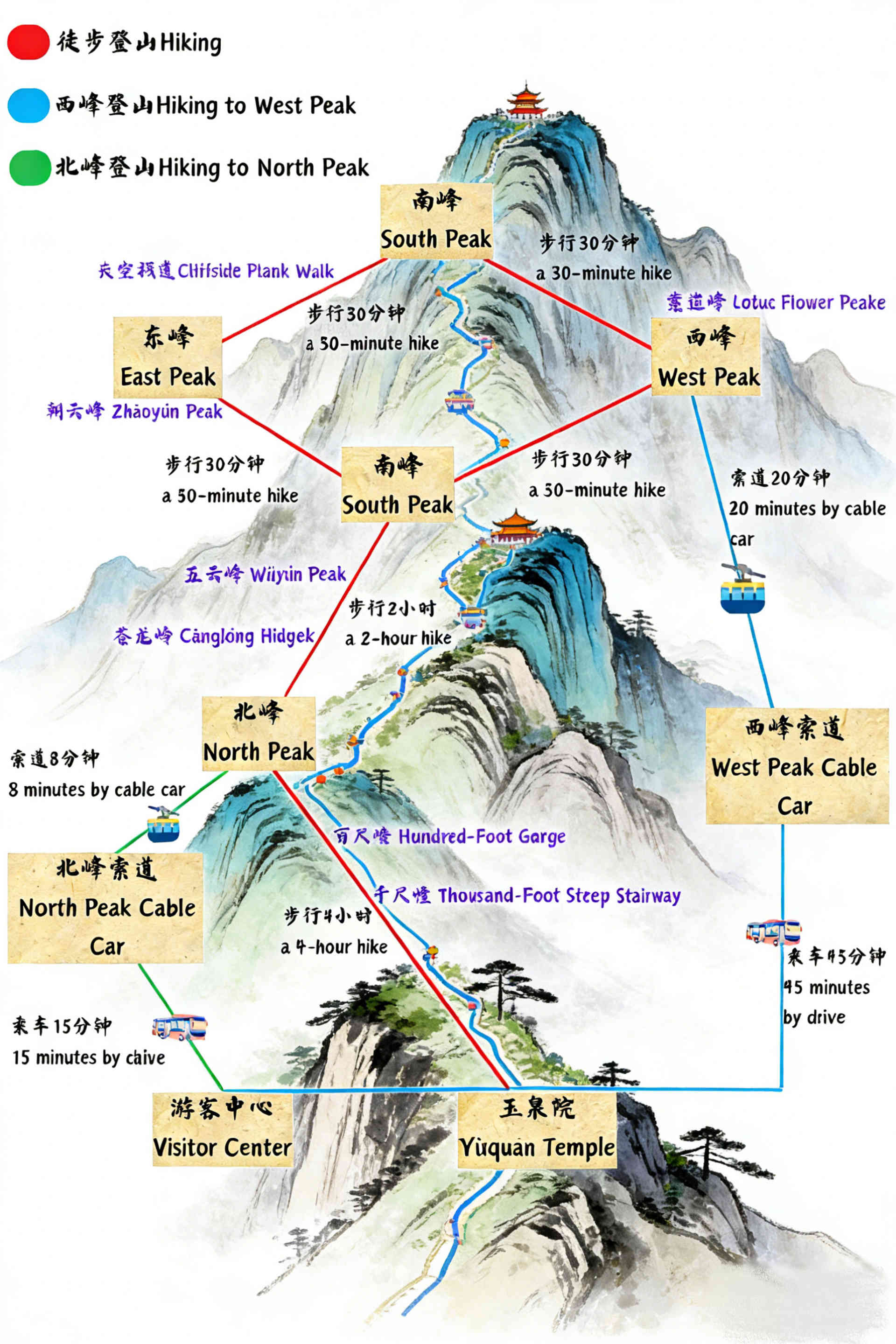
Scenic loop: West Peak up, North Peak down
Route: Visitor Center → shuttle to West Peak cable car → cable car up → West Peak → South Peak → East Peak → Central Peak → North Peak → North Peak cable car down → shuttle to Visitor Center.
Highlights: No backtracking, full loop. Best for those with good fitness.
Difficulty: ★★★★☆
Relaxed: West Peak cable car round trip
Route: Visitor Center → shuttle to West Peak cable car → cable car up → West Peak → South Peak → East Peak → Central Peak → West Peak → West Peak cable car down → shuttle to Visitor Center.
Highlights: Easiest way to see Huashan's beauty. Ideal for families and seniors.
Difficulty: ★★★☆☆
Classic: North Peak cable car round trip
Route: Visitor Center → shuttle to North Peak cable car → cable car up → North Peak → Central Peak → West Peak → South Peak → East Peak → Central Peak → North Peak cable car down → shuttle to Visitor Center.
Highlights: "Taking Huashan by Strategy" and Jin Yong's Swordsmanship on Huashan. For hiking enthusiasts.
Difficulty: ★★★★★
History & Culture
Huashan is a Quanzhen Taoist holy site, the "Fourth Grotto-Heaven," with over 20 temples including Yuquan Temple and Zhenyue Palace, and 72 half-suspended caves. It was where Patriarch Chen Tuan practiced in seclusion.
Jin Yong's "Duel on Mount Huashan" made it a pilgrimage site for wuxia fans. "Huashan's Immortal Palm" is the first of the Eight Views of Guanzhong—a giant palm print on the East Peak cliff visible near Huashan station.
Legends include Chenxiang splitting the mountain to save his mother (West Peak), Nongyu playing the flute to summon the phoenix (Central Peak), and the giant spirit cleaving the mountain.
Travel Tips
Best viewpoints
Sunrise: East Peak Sunrise Platform. Sunset: West Peak Lotus Peak. Sea of clouds: South Peak summit. Full Huashan view: North Peak Cloud Terrace.
Essentials
Non-slip gloves (chains are cold and slippery), backpack, power bank, sunscreen, at least 2 bottles of water and high-energy snacks.
Safety
Hawk's Flip requires cash; queues can be 1–2 hours in peak season—do it in the morning. Canglong Ridge has narrow steps and wide gaps in railings; not recommended with children.